12.1.11

No Naxals will be hurt in the making of Telengana state


Finally! I have finished reading the 505-page Srikrishna Committee Report on Telengana issue (pdf). Above all, I realized two things- Justice Srikrishna is no John Grisham and I hate Ministry of Home Affairs (MHA). After wading through hundreds of pages documenting the ethno-religious and social details of the region I find out that the juicy part, internal security considerations, has been censored out, courtesy MHA. What am I supposed to read if not the Naxal angle?

Surprisingly, despite hardly mentioning Naxalism in its report (minus the censored security considerations) the committee report scares the bejesus out of anyone thinking that Naxalism wouldn’t be an issue in the state formation. And it is not the only one. Security agencies (read MHA) have already suggested to the government that creating Telengana will help Naxalism rise again. So the question is, whether Naxalism is a threat for Telengana or merely a bureaucratic excuse for the government to do their favorite thing in the whole world – maintain status quo.


7.1.11

Rising Inflation, Food Riots and Onion Diplomacy


For nerds like me, who spend their time reading Ministry of External Affairs Press Briefings, it is a rare moment of humor when the Indian External Affairs Minister fumbles with a question about onions jutted between Iran gas pipeline and South African role in BRIC. In a country with highest per capita consumption of onions, lack of this essential ingredient for making curry (almost every Indian recipe under the sun) is a touchy issue. And when it is our old rival Pakistan that is remotely involved with its scarcity the situation quickly escalates to crisis levels. The media is already dubbing it the Indo-Pak Onion Wars. Unfortunately for the media, it is a minor issue that will be resolved soon, while the rising food prices are ready to spark a massive global crisis.

5.1.11

#8 India congratulates itself on the 2010 Commonwealth Games Disaster


Following on the Chinese Olympian footsteps, India was all set to have its coming out party through New Delhi 2010 Commonwealth Games. World was watching a fledgling economy flex its muscle and enter the world stage. And then reality happened. Despite being the most expensive Commonwealth games ever (with a price tag if US$ 13 billion,) the games had everything going wrong. Corruption was rampant (a $2 toilet roll was bought for $80), child labor was repeatedly highlighted by CNN and construction schedule was late by more than a year. A dozen notable athletes refused to participate and 19,000-seater stadiums sometimes had less than 100 audience. Curling in Vancouver Winter Olympics got more audience than that. 

Is this women's beach volleyball?
No wonder Wikipedia page on Concerns and controversies over the 2010 Commonwealth Games is more than 10,000 words long. That’s three times the page on Second Sudanese Civil War.

Yet it did not stop Indian Government from claiming the event a success. Country’s media towed the line, hailing the overall event a victory and promptly forgetting about the whole debacle. 

Although this was nothing compared to the drama that unfolded in Fiji…

28.10.10

Why not to go the Chinese way on the Arundhati Roy issue


The recent statements by Syed Ali Shah Geelani, leader of separatist Kashmiri group Hurriyat and author Arundhati Roy about Kashmiri independence have raised a political storm in New Delhi. Several political parties and members of media have called out for arrests of these leaders on the charges of treason. Consequently there continues a constitutional debate in the country for the legality of their arrests.

Although the Delhi Police has been given a go-ahead to file charges against the leaders, it remains to be seen whether the arrests will actually be carried out. The government continues to refuse from committing itself to either side. While there is strong sentiments in New Delhi to appease, arrest of Geelani may lead to revived political protests in Kashmir and arrest of Roy may invite international criticism.

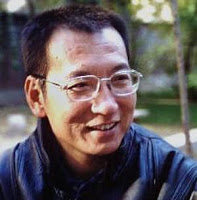
An interesting parallel is the recent drama that went on in China about Liu Xiabo who is the Nobel Peace Prize winner this year and currently under house-arrest in China. Immediately after the announcement of the prize, the Chinese led a major crackdown on internet erasing the news, arranged for a political hit-job on his character and rebuked Nobel prize committee for daring to give him the prize.

These are the reasons why we should not adopt the same model here at home:

1. International criticism not cool for a country trying to spit polish its Democracy medallions in a region full of dictatorships and communism.
2. Something called free speech as a constitutional right.
3. The fact that such statements from time-to-time are important to be made. Our government, like any other government, is not very effective in taking initiatives. It is only by forcing the government, by making big hue and cry that you can force any government to bring in reforms and I hope no one will disagree that we need reforms in Kashmir. I do not agree with Roy but I disagree with her arrest as well.

Someone just pointed out that I should be last person to cry free speech since I am in everyone's face who doesn't agree with me. But I do it for free, as an individual. The government is also free to do so, by bashing Roy through public statements. But arresting her would be crossing a line that I am really hoping we would not.

Again, I am saying Roy is an idiot who made an incorrect statement and she probably has no idea about the real situation in Kashmir. But that doesn't mean you should arrest her.

Image: Arundhati Roy, Liu Xiabo
Image credit: Jeanbaptisteparis, Voice of America

27.9.10

Please steer clear of involving Army in CWG construction

Jawaharlal Nehru Stadium, New Delhi

The unfortunate Jawaharlal Nehru Stadium bridge that collapsed last week injuring 27 people is being reconstructed by the Indian Army. Now that the jawaans are involved, there is a little doubt that the project will be completed in time. However, this state of affairs does raise the bigger question as to why the civilian authorities are so far behind in comparison to the military in simple things like construction and event management. 

India has had a long tradition of calling on its military to take care of tasks, far removed from security, in times of emergency; tasks like disaster management and mitigation, which are understandable, but also like environmental clean-up, tree plantations and now foot overbridge construction. Although Indian Army is alway able to deliver, despite the absurdity of these tasks for an organization geared towards security, it can hardly claim superiority to civilian authorities in terms of experience or expertise. As far as civilian tasks are concerned, army's strength lies only in leadership and organization skills. Yet the civilian government often turns hat in hand towards the army to do what the civilians cannot.  

What I am trying to say is that the decision to give army the task of completing the bridge is not in any way catastrophic, but it does have a symbolic impact. There is a reason why the civilian and military authority has been delineated and civil organizations conceding inferiority in domains where they should be, by all rights, superior to the army is not correct (admittedly little has gone right at all in the Commonwealth Games preparations). 

Fortunately, the Indian Army has never shown an inkling towards replacing the civilian control; however, history of the world and especially South Asia serves a stern reminder that it doesn't take long for the circumstances to change. The Indian Military Officer Corps should have faith in the civilian machinery to be capable to run the country. More often than not, the driving force behind military control in a country has been lack of faith in the civil government rather than greed of the generals.

Note: Now that I have written it, I am thinking that this idea is too far out there. Yet, at the same time, I think it shouldn't be dismissed out of hand. 

Image: Jawaharlal Nehru Stadium, New Delhi
Image Credit: seaview99


25.9.10

Fear them not

Probably the most insightful aspect of the mysterious Jama Masjid attacks (19 September 2010) is actions of 26-year-old Salim Ahmed, the rickshaw-wala who started throwing stones at the two attackers. While the confusion over why or what the Sunday shoot-out was, one thing that struck me was the immediate reaction of Ahmed, and to be fair, the constable present at the scene. Their actions foiled the attack and saved lives. Put this in contrast to the massive panic that ensued after Mumbai Terror Attacks of 2008.
I hope what happened at Jama Masjid on Sunday is not a one-time event but sign of changing attitude of the Indian public. The only true way to counter terror is not through putting a cop with a Kalashnikov at every corner, listening to all the phone calls ever made and arresting everyone we don’t like (which are only stop-gap solutions) but to refuse to be terrorized. Terrorism, like crime, is something we may very well have to live with. The threat of terrorism can never be removed, only lessened.
In general terrorist acts are followed panic and anger by the victims –Indian society and government. In anger we overreact, lash out on innocents, only strengthening extremist’s hand. In panic, we accede to their demands and give into injustice.
The overreaction to terror attacks in India can be often seen in the aftermath when the police rounds up scores of Muslims for “questioning” or shutting down entire cities of Kashmir and Northeast. Moreover, the call for blood by the public can lead to terrible consequences, as was evident in the post-Mumbai Terror Attacks India when the entire nation was up in arms asking for war against Pakistan.
The panic can be seen when the people into terrorists’ demands. Recent studies  have shown that terrorism often pays off for the extremist groups and is therefore employed. For instance, the foremost demand of Al Qaida after 9/11 was the removal of US troops from Saudi Arabia and believe it or not, today there are no US troops in Saudi Arabia.
Hopefully, now the Indian society is learning not to be completely paralyzed by fear or lash out too strongly but to deal with terrorism rationally.
Image: Jama Masjid  Image Credit:Wikimedia