27.7.11

The meaningless ritual of Terrorism


We as South Asian people have a thing for rituals. Be it religion or society or governance, we have an uncanny ability to distill a legitimate process into a rite devoid of any semblance of meaning or purpose that we continue to faithfully follow eternally without ever questioning its efficacy. Bollywood churns out movies based on the same formula, government follows the same archaic rules written a century ago and housewives, across the country, wake up every day at four in the morning to water their Tulsi plants, the sole symbol of vegetation in their household. 

Now, it seems, terrorism has also become a meaningless ritual, a theatrical performance where everyone faithfully acts out his or her role, disregarding any possibility that the whole exercise may be pointless. 
In this theatre, we all know our roles. The terrorists need to kill random people in a random city. The government needs to be unapologetically apathetic. Media needs to be outraged and jingoistic. Politicians need to resign, safe in the knowledge that they would be absorbed back into the government soon enough. Civil society needs to celebrate the artificial notion of the “Mumbai spirit”. Hotels and multiplexes need to start half-heartedly body searching their patrons again. As for the people, unfortunately, their role is simply to die.
As for the usefulness of this theatre, if there is any, it was lost long ago in the ashes of few first bombs that killed innocents in India. What does anyone gain out of all this? 

19.1.11

Dear MHA, there is something called email…

The story of how Indian Postal Department caused political crisis by losing a letter.

This happened last month, but it is too hilarious to miss out on. On 24 December, the Minister of Home Affairs sent a letter to the West Bengal Chief Minister asking him to shutdown the illegal political militia Harmad Vahini (more on that below). The letter was sent through speed post, but the Indian Postal Department, being the Indian Postal Department, didn’t deliver the letter until 27 December.

Meanwhile, the letter had been already leaked to the press and an anonymous MHA official was quoted wondering why the West Bengal Government wasn’t responding (hinting it had something to hide). Given that CPI (M)-run West Bengal Government and Congress-led Central Government are not exactly on best of terms since their fallout a couple of years ago, the three extra days gave New Delhi ample of time to snipe at West Bengal government and the latter couldn’t respond while not in possession of the letter.

15.1.11

Dyslexic Media: My rebuttal to The Economist rebuttal

Last night I wrote post about New Delhi lacking a China Policy and an appeal to get one. As it turns out, (pointed out by Achal K) The Economist had anticipated my post and published a rebuttal to my argument almost a month ago. I tell you, these Economist reporters have nothing better to do than to keep guessing what bloggers would write in the future and trying to bring them down.

Anyways, their article about “how Indian attitude towards its bigger neighbor is hardening” was a usual cut-and-paste job. Five examples of Indian assertiveness against China in 2010 had been shabbily slapped together to prove the case. After reading the article, only two questions came to my mind: What are they smoking down at The Economist office and can I get some of that? (I know I used that joke once already this month.) The examples put together paint picture of India as a sheep not a tiger. As always, the magazine was terribly wrong about India. You may not believe me, but they do this all the time.

Hey India, get a China Policy already


Since 1962, Indian policy in response to China flexing its muscle has been “see no evil, hear no evil”. Every once in a while, under media pressure, the government may wave around the Tibet card, but mostly all India wants to talk about on the issue of China is economy, factories and environment. As for issues like rising Chinese military power, Chinese support to Pakistan or frequent episodes of China making things awkward for India, there is only silence from New Delhi.

This week, China pulled the stapled visa trick again – this time on a couple of Arunachal Pradesh athletes. Once again, China said that since they do not consider Arunachal a part of India, they can’t recognize the Indian passports that athletes were carrying. Quickly the Indian Ministry of External Affairs swung into action and released a press briefing saying, “We have seen media reports on issuance of stapled visas...We have unequivocally conveyed to the Chinese side that a uniform practice on issuance of visas to Indian nationals must be followed.”  Yeah, because that has China trembling like a leaf.

14.1.11

6 Suggestions to Hindu Terrorists


Last night I ended up reading the Mumbai Police chargesheet on Abhinav Bharat (the Hindu terror group responsible for various blasts across India), the forensic report (what passes for night-time reading in my life) and Aseemanand’s (one of the Abhinav Bharat member) hand-written confession in Hindi (thanks to ER for fishing it out for me). After digesting all this information I have decided to...wait for it...convert my religion to Presbyterian Church of East Africa. The reason: I demand my religion, nay deserve my religion, to be represented a better class of terrorists. Seriously, Islam get Al Qaeda, Christianity gets IRA and Hinduism gets these monkeys? I would rather go with Somalian Pirates (East African Church kind)

The only time I will get to use Abhinav Bharat and masterminds in the same sentence is when saying, “Abhinav Bharat is to masterminds like velociraptor is to friendly pet.” While I am opposed to terrorism and violence, I am more vehemently opposed to stupidity. Hence, I am forthwith dispensing six pieces of advice to any Hindu out there aspiring to be a terrorist. Please heed to my advice or pretty much don’t blow up stuff, although preferably the latter:


12.1.11

No Naxals will be hurt in the making of Telengana state


Finally! I have finished reading the 505-page Srikrishna Committee Report on Telengana issue (pdf). Above all, I realized two things- Justice Srikrishna is no John Grisham and I hate Ministry of Home Affairs (MHA). After wading through hundreds of pages documenting the ethno-religious and social details of the region I find out that the juicy part, internal security considerations, has been censored out, courtesy MHA. What am I supposed to read if not the Naxal angle?

Surprisingly, despite hardly mentioning Naxalism in its report (minus the censored security considerations) the committee report scares the bejesus out of anyone thinking that Naxalism wouldn’t be an issue in the state formation. And it is not the only one. Security agencies (read MHA) have already suggested to the government that creating Telengana will help Naxalism rise again. So the question is, whether Naxalism is a threat for Telengana or merely a bureaucratic excuse for the government to do their favorite thing in the whole world – maintain status quo.


7.1.11

Rising Inflation, Food Riots and Onion Diplomacy


For nerds like me, who spend their time reading Ministry of External Affairs Press Briefings, it is a rare moment of humor when the Indian External Affairs Minister fumbles with a question about onions jutted between Iran gas pipeline and South African role in BRIC. In a country with highest per capita consumption of onions, lack of this essential ingredient for making curry (almost every Indian recipe under the sun) is a touchy issue. And when it is our old rival Pakistan that is remotely involved with its scarcity the situation quickly escalates to crisis levels. The media is already dubbing it the Indo-Pak Onion Wars. Unfortunately for the media, it is a minor issue that will be resolved soon, while the rising food prices are ready to spark a massive global crisis.

5.1.11

Top 10 Insanities of 2010 World Politics


Looking for an appropriate close to 2010, I played this mental game: what word comes to my mind when I think about global politics in this year? And the answer came back- insanity. Repeatedly our so-called global leaders kept on making unbelievably stupid mistakes that a slightly below-average eighth-grader would laugh over. Some were circumstantial, some can be blamed on alcohol and volcanoes (See #3. McChrystal’s Folly) but some were so deliberately stupid that we would only be able to explain them to our grandchildren with a shrug and we-were-high defense.

So here are your Top 10 Insanities of 2010 World Politics: Click here or scroll down.

#8 India congratulates itself on the 2010 Commonwealth Games Disaster


Following on the Chinese Olympian footsteps, India was all set to have its coming out party through New Delhi 2010 Commonwealth Games. World was watching a fledgling economy flex its muscle and enter the world stage. And then reality happened. Despite being the most expensive Commonwealth games ever (with a price tag if US$ 13 billion,) the games had everything going wrong. Corruption was rampant (a $2 toilet roll was bought for $80), child labor was repeatedly highlighted by CNN and construction schedule was late by more than a year. A dozen notable athletes refused to participate and 19,000-seater stadiums sometimes had less than 100 audience. Curling in Vancouver Winter Olympics got more audience than that. 

Is this women's beach volleyball?
No wonder Wikipedia page on Concerns and controversies over the 2010 Commonwealth Games is more than 10,000 words long. That’s three times the page on Second Sudanese Civil War.

Yet it did not stop Indian Government from claiming the event a success. Country’s media towed the line, hailing the overall event a victory and promptly forgetting about the whole debacle. 

Although this was nothing compared to the drama that unfolded in Fiji…

#6 Nepal fails to elect a Prime Minister for 16 times


The beautiful country of Nepal has been under political turmoil for more than four years now, preceded by a decade-long civil war. However, no one was prepared for the comedy of 2010. In June, Nepalese Prime Minister Madhav Kumar Nepal (seriously, who is better equipped to run the country than Mr. Nepal himself!) resigned in a dramatic televised speech after one-year tenure. Under constant pressure from Maoists and tired of internal squabbling of a 22-party coalition, PM Nepal simply called it a day. But little did he know that he won’t get off that easy. Now head of the caretaker government, he had to hand over reins to the new Prime Minister elected by the parliament, who never showed up. 

Over the next six months from July to December, Nepalese Parliament called for a vote 16 times but ran into deadlock every time. The parliament has called for another vote in the end of January but something tells me that we might not be seeing a replacement PM anytime soon. Meanwhile, the security situation in the country is worsening everyday and everyone is out to play the kingmaker including India. 
We would totally elect a PM this time
While Nepal has no government, another country has too many…

4.11.10

India goes to South Pole: Love of science or future security in mind?

A team of eight scientists has just left for the South Pole, first Indian trip to the (technically) end of the world. While the scientists have put forth their agenda to study the climate change in the region, I can't help but wonder that some in New Delhi may have an eye on the nation's future security.

27 countries have their research stations in Antarctica (the continent with South Pole.) Maitri, the Indian research station on the continent is the second one, first having been abandoned in 1990. We have been there for thirty years! Why is India spending so much money on the coldest place in the world? I suspect not all of it has to do with the love of science.

Antarctica, although not a well explored part of the world, is believed to have oil, gas, coal, iron and gold. Currently, all exploitation of minerals is banned in the region under the Protocol on Environmental Protection to the Antarctic Treaty, which will stay in place until 2048, unless the scarcity of minerals jacks the oil prices so high that it becomes economical and lucrative to mine them out of literally anywhere on the planet. I am pretty sure no one is going on war over breaking the Protocol on Environmental ...whatever mumbo-jumbo it was.

With that in mind, we already have twelve countries including US, Russia, UK and Norway. Notice that some of these countries are as far away from Antarctica as I am from winning a Grammy (although a Grammy would be nice to put along the Oscar that I am sure to get.) And they sure as hell don't want Antarctica to open up beach resort. The only significance that the continent has is resources. And India getting its own foot in the door for future leverage. Not that our scientists won't learn something about climate change as well.

A similar case was made in 2007, when the Russians went ahead and planted their flag on the North Pole. Again the North Pole is expected to be surrounded by oceans of oil.

If they didn't have a treaty, moon as well would have been divided by now.

Image Credit: Wikimedia

28.10.10

Why not to go the Chinese way on the Arundhati Roy issue


The recent statements by Syed Ali Shah Geelani, leader of separatist Kashmiri group Hurriyat and author Arundhati Roy about Kashmiri independence have raised a political storm in New Delhi. Several political parties and members of media have called out for arrests of these leaders on the charges of treason. Consequently there continues a constitutional debate in the country for the legality of their arrests.

Although the Delhi Police has been given a go-ahead to file charges against the leaders, it remains to be seen whether the arrests will actually be carried out. The government continues to refuse from committing itself to either side. While there is strong sentiments in New Delhi to appease, arrest of Geelani may lead to revived political protests in Kashmir and arrest of Roy may invite international criticism.

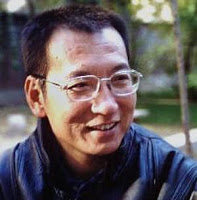
An interesting parallel is the recent drama that went on in China about Liu Xiabo who is the Nobel Peace Prize winner this year and currently under house-arrest in China. Immediately after the announcement of the prize, the Chinese led a major crackdown on internet erasing the news, arranged for a political hit-job on his character and rebuked Nobel prize committee for daring to give him the prize.

These are the reasons why we should not adopt the same model here at home:

1. International criticism not cool for a country trying to spit polish its Democracy medallions in a region full of dictatorships and communism.
2. Something called free speech as a constitutional right.
3. The fact that such statements from time-to-time are important to be made. Our government, like any other government, is not very effective in taking initiatives. It is only by forcing the government, by making big hue and cry that you can force any government to bring in reforms and I hope no one will disagree that we need reforms in Kashmir. I do not agree with Roy but I disagree with her arrest as well.

Someone just pointed out that I should be last person to cry free speech since I am in everyone's face who doesn't agree with me. But I do it for free, as an individual. The government is also free to do so, by bashing Roy through public statements. But arresting her would be crossing a line that I am really hoping we would not.

Again, I am saying Roy is an idiot who made an incorrect statement and she probably has no idea about the real situation in Kashmir. But that doesn't mean you should arrest her.

Image: Arundhati Roy, Liu Xiabo
Image credit: Jeanbaptisteparis, Voice of America

21.10.10

Salwa Judum is back...sorta

In 2005-2006, the Government of Chhattisgarh came up with a brilliant solution for the Naxalism problem. Why not give the tribals living in these areas some guns and let them fight it out with Naxals? With this Salwa Judum (Peace March) was born. Cloaking it as a socio-political movement, the government claimed that the tribals were motivated on their own to fight naxals and the government was merely supporting the movement (with guns.) Many tribals were taken up as Special Police Officers (SPOs) and others were just given weapons.

Needless to say giving guns to untrained (or partially trained) young boys with nothing better to do is not gonna end up well. I am not going to go in the gory details (you can read them here [.pdf]) but the situation became very bad. The Judum members started killing each other, sold the weapons to Naxals themselves, abused their power and recruited child soldiers. A case currently ongoing in Supreme Court accuses Judum of "over 500 murders, 99 rapes and 103 acts of arson." With all the heat generating because of this drama, the government did what it does best- locked the file and underwent a selective amnesia. Judum is currently in limbo. It hasn't exactly been disbanded but guns and money has stopped pouring in.

A few days ago, some of the leaders from Salwa Judum, launched a new political forum and held a press conference. The new forum, DKSSS is supposed to find a peaceful resolution to the Naxal strife. The communists immediately responded to this declaration for a 48-hour bandh. 

I talked to a couple of very interesting and knowledgeable people in Chhattisgarh who are working on this issue and they suggested that DKSSS is probably has to do with the Judum leaders trying to remind the government of that they still exist. When Judum came up, these leaders came out openly against the Naxals. Now they have burned the bridges and constantly have to be surrounded with bodyguards. Disowned by the government they are kind of stuck between a rock and a hard place. They resent the government for having left them while every Naxal in the neighbourhood is trying to tak a shot at them.

Of course, another angle to the whole issue is the money as it almost always is. While Judum continued a lot of people made a lot of money. With the government support drying up, their own pockets are getting lighter. It may be another reason to push for reviving Judum.

Whatever the reasons might be, for the time being, Judun remains an unresolved issue that may come back to haunt Chhattisgarh for a long time to come.

Image: Judum members being trained
Image Credit: humanrightsforum.org

19.10.10

We still don't know which part of India is Bangladeshi and which part of Bangladesh is ours

A little piece violence erupted over the weekend when some Indians allegedly killed a Bangladeshi in Bangladesh and hid his body in a border village of Garati in India. The Bangladeshis (some 2000 of them) got so miffed that they surrounded the village and burned the thing down, making more than 200 Indian families homeless. Bangladeshi police has arrested 11 guys for the arson.

Now what is wrong with this picture? Only that we are talking of cross-border drama. Two thousand Bangladeshis just came and burned a village down. What happened to the border security, BSF and all the check posts?

This is because the Indian village of Garati, along with hundreds of others, is inside Bangladesh. And many Bangladeshi villages are inside India! So Indian citizens, (140,000 people) who are under Indian law, are merrily living in villages many kilometers inside the Bangladesh border and vice versa.

How? Bangladesh and India share a 4,156 kilometres-long border, of which 6.1 kilomtres is still un-demarcated (under dispute). Meaning that since the independence of Bangladesh in 1971, New Delhi and Dhaka haven't had five minutes to dispose of a frigging 6.1 km of border. Now I am the first one to claim that most international issues are usually too complex but this is 6.1 km. You can walk that much in a decent mall if you shop all day.

While the great government bureaucracies take their sweet time (40 years) to sort this out, about 200,000 people are living in foreign countries, lack basic amenities like water and electricity and have an overall terrible life. Meanwhile, these confusions exacerbate the already growing problems of porous Indo-Bangladesh border like the illegal migration, terrorism, crime and smuggling. 

Good job everyone!

Image: India-Bangladesh border map
Image Credit: US Government

14.10.10

So we won the UNSC seat, now what?

I imagine the Indian Ministry of External Affairs will be celebrating tonight, now that after a lot of lobbying they have finally won the non-permanent United Nations Security Council seat. Clearly the government is very happy, since they feel the election as an offset to all the damage that the CWG did to the Rising India rhetoric.

Now what? Obviously, the big thinkers of foreign policy in India Siddharth Varadrajan and C Raja Mohan have already given their take. The non-permanent seat is being seen by many as a sort of audition for India to later become a permanent member. Mr. Varadrajan sternly advises India not to be a US mouthpiece but instead develop its own identity as a "responsible" global power that can take its own decisions. This will raise its reputation in the eyes of rest of the world.

Hmm... I am thinking in very different lines. I would think that we can not possibly get a permanent seat without Uncle Sam's approval. Also, Uncle Sam still has the muscle in the world to do so, even when the rest of the world is not very enthusiastic about it (after all, they got us the NSG approval, albeit with support from some others). Moreover, the American  say-so in the world is waning, or at least the Chinese power is rising and consequently America is growing weaker by comparison. 

And it is not in the Chinese interest to give India a permanent seat. Since there is a lot of overlap in Indian and Chinese interests, why would Beijing want a potentially dissenting voice with veto power? And for precisely the same reason, the US has an interest in getting India the permanent membership because it will somewhat check the influence of China.

So, India has a very short time period before the window closes, that is US gets China as an equal contender in world dominance. After that it will be difficult for the US to take a big step like this without the Chinese approval or at least neutrality. Hence, may be we should take a gamble and become American protege for a little while and get them to sponsor our permanent stay in UNSC. Once we have the permanent lease, then  we can do whatever we want. Meanwhile, who cares what Mauritius or Zanzibar thinks?

Of course, this is just an idea - option in bureaucratic lingo; thank god I am not running the country.

Image: UNSC Chamber in New York
Image Credit: Patrick Gruban

11.10.10

Indian Maoists being trained in Nepal...and we are just making it worse.

The Ministry of Home Affairs has just warned the state governments that many Indian Maoists are being trained along with the People's Liberation Army of Nepal Maoists by Lashkar-e-Toiba in Nepal. Considering that the Indian Government has thrown all its weight (read below) against letting Nepalese Maoists build a democratically-elected coalition government in the country, what can you expect from them.

The Nepalese Maoists, after a decade of bloody civil war, laid down their arms in 2006 to join the Nepalese democracy. However since 2009, when the Maoists resigned from the government, the country has been a rudderless democracy. Yesterday Nepal failed to elect a new Prime Minister, for the twelfth time in the last two months! 

And to top it all off, the Indian Government is doing all it can to disallow the Maoists from making a coalition government. A month ago, an Indian intelligence operative actually threatened a member of Nepalese Parliament to have his daughter's admission revoked from the embassy-run Kendriya Vidyalaya if the MP does not vote a particular way. True story.

Of course with this attitude towards Maoists, it is no surprise that they are looking at us as their enemies. What does government expect to achieve even if it succeeds in ousting Maoists from the democratic process? Maoists with more than 8,000 troops and experience of fighting civil war for more than a decade. Won't their failure as a democratic party simply boost the extremist factions within them and lead to greater sponsorship to the Indian Maoists?

7.10.10

Karzai talks to Taliban; Indian security circuit goes in paranoid overdrive

Afghan President Hamid Karzai has opened up talks with Taliban to reach a peaceful solution to a twenty-year long war. In the last twenty-four hours, both White House and Mullah Omar have given the talk thumbs-up further strengthening its chances to succeed. And of course, this has sent Indian security circuit to a frenzy of worries. 

New Delhi is worried about losing out in its competition with Pakistan to control Afghanistan, once again. If the talks succeed (which is in no way guaranteed) Taliban is likely to get a significant share of power in Kabul. US, with a President already looking a way out of Afghanistan, will be quick to pack its bags, declare victory and go home. And all that will be left in Afghanistan will be a weak and unpopular President, a legitimized Taliban and their friends the ISI. Billions of dollars of Indian aid and all that nosing around of R&AW agents around Kabul for the last ten years will go down the drain.

For the past twenty years India and Pakistan have been competing over the dominance over Afghanistan.  While the Pakistani Army considers Afghanistan critical to gain "Strategic Depth" in a war with India, New Delhi feels it has to deny ISI eastern Afghan region as base to train and equip terrorists.

After the fall of communist regime in Kabul in 1992, India and Pakistan backed different war lords to run the country. While India gave millions of dollars in aid to the Tajik commander Ahmed Shah Massoud, Pakistan supported first the Pashtun leader Gulbuddin Hekmatyar and then Taliban. Advantage: Pakistan.

After 9/11 and US invasion of Afghanistan, while India claimed a hands-off approach in Afghanistan, it spent billions of dollars in aid and sponsored extensive diplomatic and espionage activity. Meanwhile, Pakistan struggling with its own problems, was kept at bay by the US from meddling directly in the Kabul government. Advantage: India

If Taliban comes back to power as a political party and the US leaves this region of the world, Pakistan is again likely to gain upper hand. However, the question to be asked is, was there any other scenario possible? Was an outcome possible where India did retain its influence in Kabul? I can't think of one.

Image: President Hamid Karzai in discussion with US President Obama
Image Credit: Wikimedia

5.10.10

Mozambique: Another theater for India-China trade war

I will preface by saying that I might be wrong on this, but seems to me that India is gearing up to protect its economic position in Mozambique as China tries to big-foot its smaller neighbor out of the African continent. A couple of days ago, India extended a credit line of US$ 500 million to Mozambique while Mozambican President was visiting New Delhi. Considering that until last week, the total amount of money extended through previous six lines of credit was only US$ 140 million (source: MEA), this figure is considerable jump. Why is it so?

It seems that India and China both are vying the extensive coal deposits in Mozambique. In the past India, along with Australia, has dominated the Mozambican coal reserves. TATA Steel and SAIL, both have extensive interests in the country. Traditionally, China has shown little interest in Mozambican coal and gas reserves, only importing agricultural products and fisheries from the country. Although the trade relations is on the meteoritic rise, China has restricted itself to importing food and selling machinery. That is, until three months ago. In June, 2010, Chinese steel companies announced their plans of entering Mozambique and investing billions of dollars in developing the coal fields in the country.

Obviously, the Chinese entry into Mozambican coal business is likely to prove a tough competition to the Indian steel companies just like the Indian oil companies have been outbid across the globe by the Chinese. In a reactionary strike not to lose dominance in another African country in race to get raw materials, India seems to have replied with doling out money to the Mozambican government.

Of course, India cannot match China in the amount of aid given. What it can match the Chinese is in how the aid is given. The Chinese are infamous in Africa for not allowing technology transfers and training to the Africans. India can win some favors in the African markets by treating them better than the Chinese in this respect.

29.9.10

Can we please take a page from Iceland


Yesterday, Iceland's former Prime Minister Geir Haarde became the first world leader to be charged in connection of the Global Economic Crisis. What is fascinating about the whole episode is the fact that he was not charged with corruption but with criminal negligence! That's right. He will be tried in a criminal (as against to a civil) court for failing to provide good governance. If he is convicted he can face two years of jail.

Can we also take a page from Iceland and try our leaders for criminal negligence? I am sure a large part of the government will be in jail for the CWG fiasco. The best part is you don't even have to prove that the government officials have taken bribe only that they were negligent of their duties. I am sure our constitution can be interpreted in a certain way to find the legality. 

The only pitfall that I can imagine for such a practice will be that elections may often lead the new government to lock up the old government in jail leading a vicious cycle. However, there will also be a certain level of responsibility that we can expect from the politicians. After all, as of now we have absolutely no way of punishing them except for removing them from power. This leaves very little incentive for a leader to do good if he can just fill up his pockets in five years and then retire. 

Update: Kashmir Reconciliation Package

After putting up the Kashmir post, I asked Suba Chandran of Institute of Peace and Conflict Studies (and my former boss) to give me some feedback on the reconciliation package. Always one step ahead, he has already written a detailed paper on the issue, which covers far beyond what I had talked about.

The main point to take home from his paper is the idea that the current policy that New Delhi has on Kashmir is to have no policy. "[T]he calculation today in New Delhi is, perhaps, that this round of violence will also subside. So sit tight. Do Nothing. Violence will go down automatically." Although the vagueness of the reconciliation package may be due to the fact that it is a skeleton structure for future development, it may very well be motivated by the policy of no policy.

Chandran argues that such attitude towards Kashmir will be harmful in the long run. Instead he gives a brief plan of creating consensus in India and Kashmir reach an effective solution to this problem.